26 April 2015

Ivy: The Sands Of Ozymandias

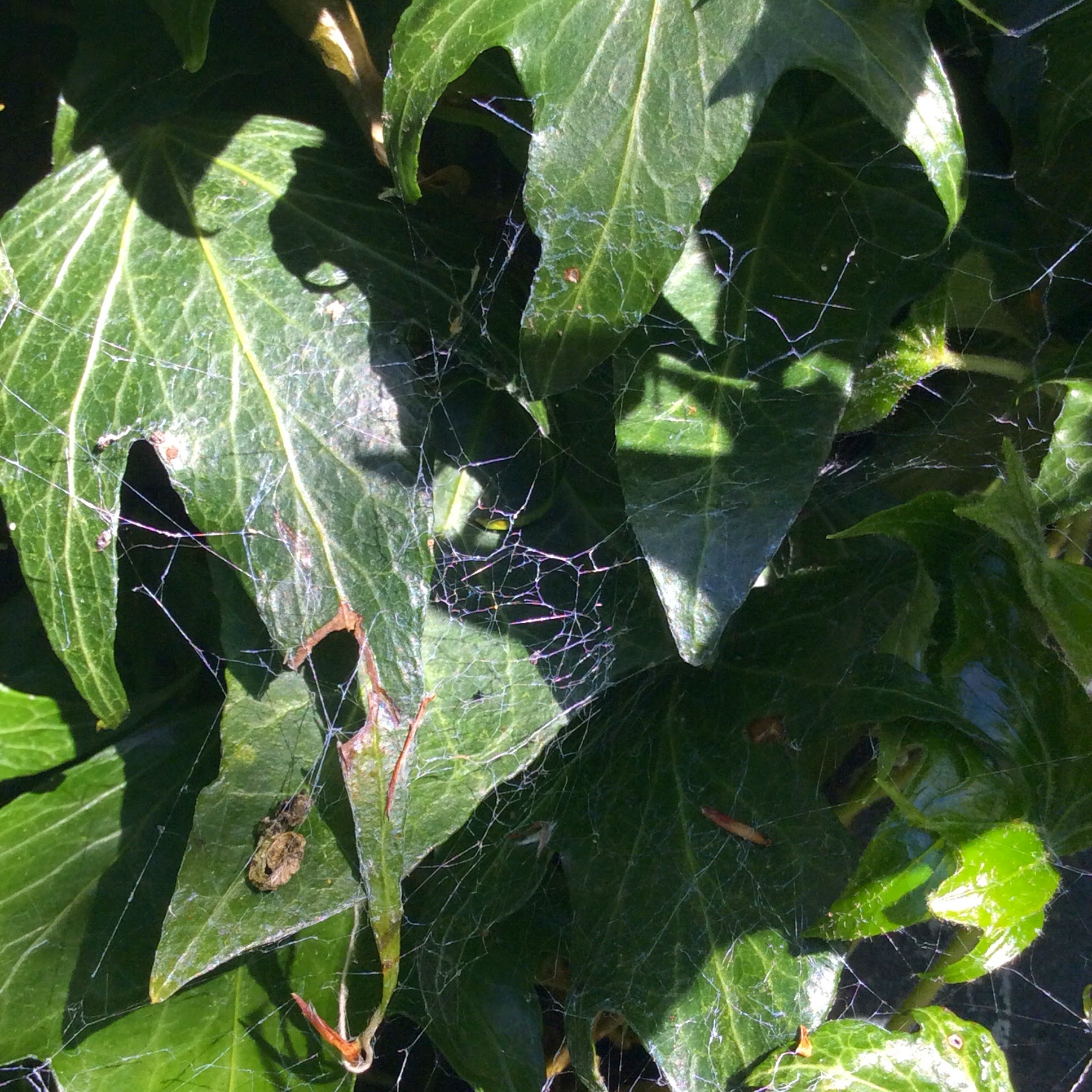
Ivy is a unnerving plant. Like a great green wave it just keeps on coming. It doesn't take long to engulf exposed lengths of fence, or stretch out tendrils to conquer new ground. Severe pruning doesn't dishearten it. Give it an inch and it'll take a mile.

It is an aggressive dark presence looming on the edges of the garden, threatening to drown everything in its way. But in some ways those Gothic qualities give it an elegant grace that save it from simply being an annoying weed.

Conservation charities generally remove ivy from the old buildings they look after because it can be damaging to weak masonry, but during the Romantic period of the early 19th century a covering of ivy was thought to enhance the appeal of any ruined monastery or castle.
“Where legendary saints and martyrs on the ornamented panes once testified the zeal of the founder and the skill of the artist, the ivy flaunts and the daw builds her nest while to a fanciful eye Nature and Time seem proud of their triumph over the labour and ingenuity of man" William Gilpin 1818
Whatever you think about it, if you think it romantic or menacing, it is an important plant for wildlife. At least 70 insect species eat some part of it, it can be the main food source for autumn foraging bees, and then other things eat the insects and the berries the bees create.

So in these years of dwindling natural resources the inexorability of ivy must be tolerated, perhaps even celebrated.

21 April 2015

Common Dogs

The weeds in Garden65 (and goodness it's approximately 40% weeds) are so young they still have an air of innocence about them. They have arranged themselves into attractive little assemblages, and I can't help viewing them with affectionate indulgence.
Of course, this is a mistake. It won't be long before they grow into big bastards with a stubborn attitude.

But until they do let's take a closer look at the pretty Dog Voilet. Ha! I'm calling it pretty now, but in a couple of months time I'll be cursing it when I'm on my hands and knees prising it from the crazy paving with a butter knife.
The Common Dog Voilet, Viola riviniana, has 5 purple petals, with a central white area helpfully lined with directional stripes that guide pollinating insects down to the nectar. This is contained in a spur formed by the lower petals at the back of the flower.
There are a handful of other violets, apart from the common Common Dog, such as the Early Dog and the Sweet Violet. These have purple or blue spurs, whereas our common violet has a white spur.
And after fiddling with all the little flowers in the garden I can confirm there are no rare violets here.


17 April 2015

Gardens Give Life


This week I have been staying with my M&D in their Suffolk home.

Since they have a big beautiful garden, and they are surrounded by Nature in all its oceanic and rural abundance, I thought it would be easy to find a topic to write about. But it has turned out to be too difficult to pick one thing. Should the blog mention the gorse flowers that smell of coconut, the polite mating rituals of swans, or foamy white blackthorn blossom?

So instead I'd like to make a general observation.

While I wrestled with some pastry (another story) my mum went on an excursion to the gardens of a stately home with her gardening group, and my dad got the ladder out and brought a tall shrub back under control with some lethal looking hedge clippers.

When mum came back we all had a cup of tea and talked about walled gardens, planting new orchards, and did dad really know what he was doing.

Thus gardens and gardening have allowed these two people to be themselves. Dad got to be heroic and mum got to be with friends and consider History.

I'm sure there are other ways they could have done this. Perhaps it might involve art galleries and museums, or workshops and evening classes, or even bingo halls and pubs.

But is it Gardening that will keep them healthy and happy the longest?
Let's hope so.